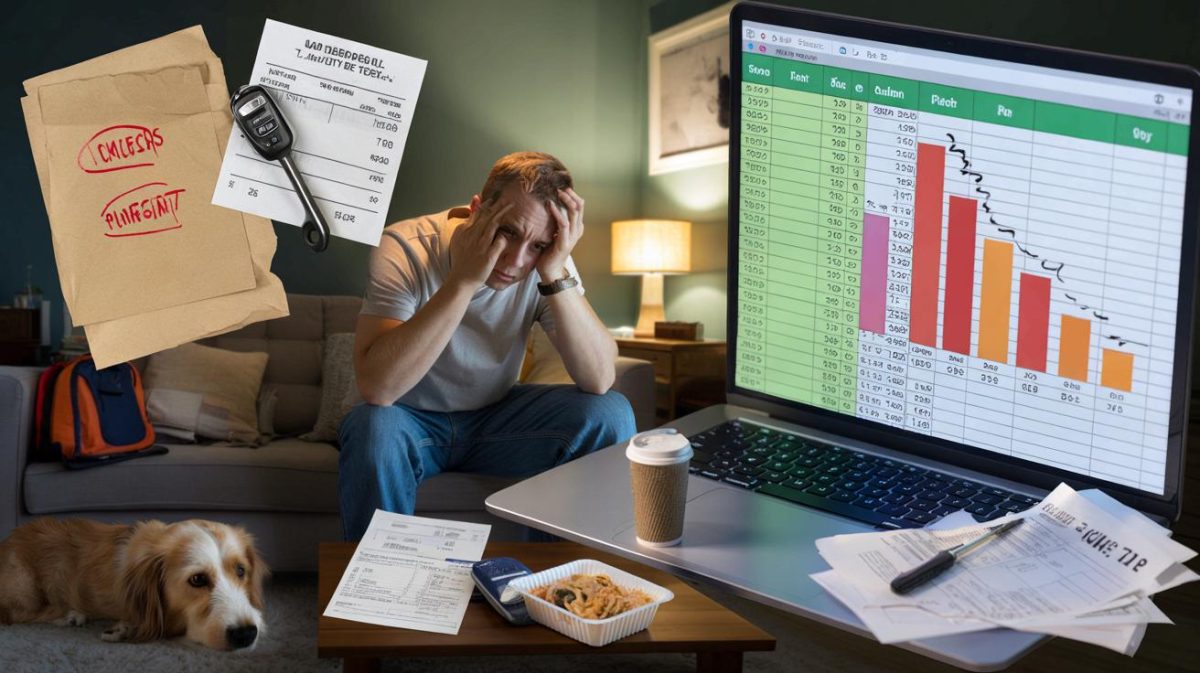
Your phone is on silent, yet your body doesn’t believe you.
A Slack notification you’ll read tomorrow.
A parent’s missed call that wasn’t urgent.
A vague “can we talk later?” from your partner sitting like a stone in your stomach while you wash the dishes, answer the email, pretend to relax on the couch.
Your shoulders don’t drop. Your chest doesn’t fully exhale.
You’re not technically on call. You’re not a surgeon, not a firefighter, not staff on a crisis line.
Still, some part of you feels permanently ready to pick up, to fix, to soothe, to explain.
You go to bed, but your mind keeps a uniform on.
And there’s a clear psychological reason for that.
That invisible job of being “emotionally available” 24/7
Scroll through any group chat and you’ll see it: people apologising for “not replying sooner”, for “going offline”, for “missing your call”.
We’re all walking around like tiny call centers in human bodies, waiting for the next emotional ticket to land.
You’re halfway through a movie and suddenly you’re writing a three-screen response to a friend in crisis.
You’re bone-tired after work yet still holding space for your partner’s bad day, your mum’s loneliness, your manager’s frustration.
There’s your official job.
Then there’s the unpaid, unspoken one: being emotionally on call for everyone around you.
Take Emma, 32, project manager, “the strong one” in her family.
Her days are meetings and deadlines, her nights are voice notes from friends, calls from siblings, “quick favours” from colleagues pinging in at 10:47 p.m.
She describes it like this: “My phone isn’t the problem. My brain is. I feel guilty if I don’t answer fast. I feel responsible if someone is upset. If my phone is off, my anxiety is on.”
➡️ “I observed my garden early every morning” and spotted stress before damage appeared
➡️ This is the easiest way to keep shoes looking new longer
➡️ This simple cleaning boundary changed how my home feels
➡️ If you struggle to unwind after screens, this eye-relief trick helps
➡️ I cooked this creamy dish and didn’t feel the need to adjust it
➡️ If your house never feels fully tidy, this hidden cause is often responsible
➡️ Psychology explains why emotional responses may appear long after decisions are made
➡️ “I cook this dish slowly because rushing it never works”
No one told her she had to be available all the time.
Yet every small “can you talk?” sounds like a silent emergency.
So she picks up. Again. And again. And again.
Psychologists have a name for what’s beneath this: hypervigilance.
It’s the state of being constantly on guard, scanning for potential threat, conflict or disapproval.
For some, this comes from childhoods where moods changed without warning, where you had to anticipate anger or sadness before it exploded.
For others, it’s burnout culture dressed up as “being a team player” or “being a good partner”.
Your nervous system learns a rule: connection is conditional, safety is conditional.
So you stay alert, emotionally “on shift” even when nobody asked, because deep down a quiet fear whispers:
If I’m not available, I’ll be abandoned.
Where that “always on” feeling really comes from
One practical way to decode this is to ask a blunt question:
“Who taught me that everyone else’s emotional state is my job?”
Sometimes the answer is obvious. A parent who leaned on you like a therapist. A partner whose crises always took center stage.
Sometimes it’s more subtle. You were the peacekeeper child, the one who calmed the room, who translated everyone’s feelings.
What feels like a “current problem with my phone” is often an old pattern running in the background.
Your brain learned that being relaxed is dangerous.
So relaxation now feels like negligence, and silence starts to sound like failure.
Picture a kid stepping carefully around a house where tempers flip like light switches.
They learn to read footsteps in the hallway, tone shifts in voices, the sound of a door closing slightly too hard.
Fast forward twenty years and that same radar is still on.
Only now it scans WhatsApp, email, Instagram DMs, a partner’s slightly shorter message.
The adult doesn’t think, “I’m hypervigilant.”
They think, “I’m just sensitive,” or “I care a lot.”
Inside, the same loop plays: anticipate, prevent, soothe, repeat.
The result is a permanent, buzzing readiness that never truly powers down.
From a psychological angle, this often mixes three threads.
First, attachment: if you grew up feeling love was unstable, you may try to secure it by responding fast, fixing everything, never being the one who “drops the ball”.
Second, people-pleasing: when your worth was measured by usefulness, your brain equates rest with being disposable.
Third, societal pressure: hustle culture praises availability, from “quick calls?” at 8 a.m. to “just circling back” at 11 p.m.
Put those together and you get a nervous system stuck on a high alert setting.
Not because you want drama, but because *your body doesn’t fully believe you’re allowed to log off from caring*.
How to gently clock out from emotional on-call duty
One simple practice many therapists suggest is creating “emotional office hours”.
Not for the world. For you.
Pick two clear windows in the day when you consciously respond to messages and hold space for others.
Maybe 12:30–13:00 and 19:30–20:00.
Outside those slots, you’re off shift, even if your phone buzzes.
The goal isn’t to become cold or unavailable.
It’s to teach your body that availability can be chosen, not forced.
At first it will feel wrong, even selfish.
That’s a sign you’re touching the old wiring.
Here’s where many people trip: they try to go from “always on” to “flight mode monk” overnight.
They delete every app, declare a digital detox, then crumble at the first “are you mad at me?” message.
Let’s be honest: nobody really does this every single day.
A kinder path is micro-shifts.
Read a message, breathe, and wait five minutes before replying.
Leave one non-urgent text until tomorrow and notice that the world doesn’t end.
Talk to the part of you that panics: “We’re still a good friend. We’re just not a 24/7 emergency line.”
That sentence alone can loosen years of guilt.
“Boundaries are not walls against love; they are the structure that lets love last,” explains a clinical psychologist I spoke with. “When you’re emotionally on call all the time, resentment eventually walks in.”
- Name your role
Write down the invisible jobs you’re doing: therapist friend, crisis manager, family mediator. - **Set a tiny limit**
One small experiment this week: no replying to non-urgent messages after a time you choose. - Create a calming ritual
After you “clock off”, do one thing that signals safety to your body: reading, stretching, music, a silly show. - Expect pushback
Some people will test your new limits. That doesn’t mean you’re wrong. It means the system is adjusting. - Notice who respects you more
The people who value you won’t only want the version of you that is endlessly available.
Living a life where your nervous system gets to rest
Once you start seeing the pattern, everyday moments look different.
The late-night “you up?” messages don’t just ask for your time, they ask for your emotional labor.
The constant “can you just quickly…” at work stops feeling normal and starts looking like boundary creep.
You might grieve a bit.
The identity of being “the reliable one” is heavy to take off.
Yet underneath it, there is a person who is allowed to be tired, offline, not in the mood to fix anything.
This isn’t about becoming untouchable.
It’s about letting your nervous system experience what true off-duty feels like: no waiting for the ping, no invisible scanning, no secret dread of the next “we need to talk”.
You may notice that when you rest, real intimacy deepens.
Conversations become less crisis-driven, more honest.
Some relationships fade when you stop being their 24/7 support line, and that hurts.
Other connections quietly grow, because now you’re meeting from choice, not obligation.
There’s also a wider question here.
What would communities, friendships, workplaces look like if we didn’t valorise self-sacrifice, if “I can’t, I’m done for today” became a respected sentence?
Emotional availability is a gift, not a contract.
You’re allowed to protect the muscles that give it.
The next time you feel your body snap to attention at a simple notification, maybe pause and ask:
Is this a real emergency, or an old alarm still ringing?
| Key point | Detail | Value for the reader |
|---|---|---|
| Psychological origin | Feeling “on call” often comes from hypervigilance, people-pleasing and unstable early attachment | Helps you see the pattern as learned, not as a fixed personality flaw |
| Practical boundaries | Using emotional “office hours” and small response delays retrains your nervous system | Offers concrete steps to feel less overwhelmed without cutting people off |
| New identity | Shifting from “always available” to “sometimes available by choice” | Invites a healthier sense of self and more balanced relationships |
FAQ:
- Is feeling emotionally on call a sign of anxiety?Often yes. It’s closely linked to anxiety and hypervigilance, especially if you grew up around unpredictable moods or conflict.
- How do I know if I’m just caring or actually over-functioning?If you feel exhausted, resentful, or guilty when you rest, you’ve probably crossed from caring into emotional overwork.
- What do I say to people when I start setting boundaries?Try simple lines like: “I care about you, and I’ll reply properly when I have the headspace,” or “I’m off my phone tonight, let’s talk tomorrow.”
- Could therapy help with this always-on feeling?Yes. Therapy can trace where the pattern started, work on attachment wounds, and teach your body what safety and rest feel like.
- What if people get angry when I’m less available?That reaction often reveals who relied on your lack of boundaries. Discomfort is common at first, yet the relationships that survive usually become more mutual and respectful.